
Your siding spends every day exposed to rain, moisture, wind, temperature changes, and everything else the Pacific Northwest brings with it. Choosing fiber cement siding gives homeowners an exterior material designed to handle those conditions without requiring constant attention.
For homeowners considering exterior siding replacement, choosing a material means thinking beyond what looks good on installation day. The better question is how that siding will perform years from now in the conditions your home faces every season.
What Is Fiber Cement Siding?
Fiber cement siding is an exterior cladding material made primarily from cement, sand, water, and cellulose fibers. The result is a durable material that can provide the appearance of traditional siding while offering greater resistance to many of the conditions that can cause exterior materials to deteriorate.
It is available in different profiles, textures, and finishes, so homeowners are not limited to a single look. Depending on the product, fiber cement can create the appearance of lap siding, shingles, vertical panels, or other architectural styles.
Why Fiber Cement Works Well in the Pacific Northwest
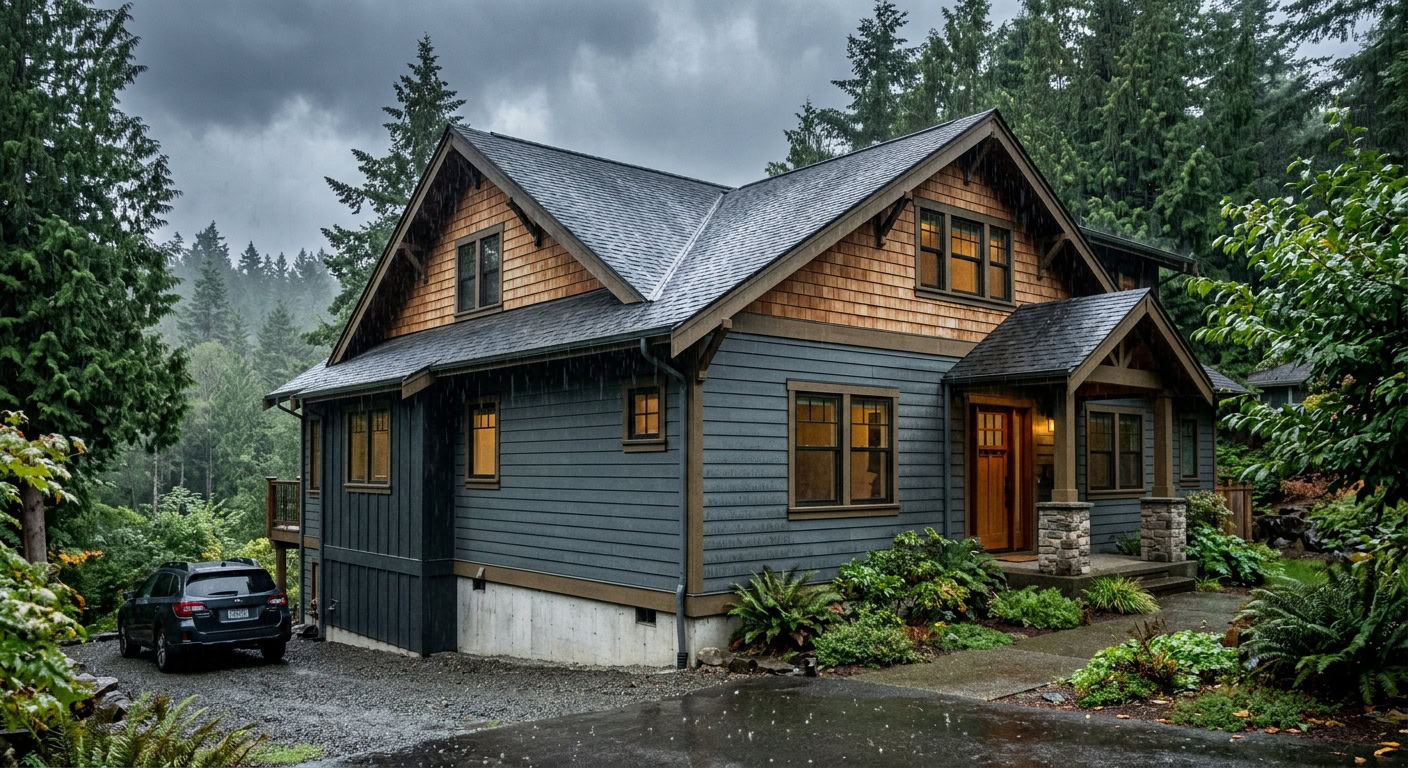
A siding material that performs well in one part of the country is not automatically the right choice everywhere. In Washington and Oregon, frequent moisture exposure makes water resistance an especially important consideration when comparing siding options.
Fiber cement is engineered to resist damage from moisture and rot rather than absorbing water as some traditional exterior materials can. James Hardie also develops products for specific climate conditions, including products engineered to withstand wet and freezing environments.
For someone searching for fiber cement siding in Vancouver, that regional performance matters. The same is true for homeowners in Auburn, Eugene, and other communities where seasonal rain and changing temperatures place ongoing demands on a home’s exterior.
The Benefits of Fiber Cement Siding
Long-Term Durability
Replacing home siding is a substantial project, so longevity matters. Fiber cement is designed to withstand exposure to rain, wind, temperature fluctuations, and other environmental conditions without many of the vulnerabilities associated with less durable materials.
It also holds little appeal for termites, woodpeckers, and other pests that can damage wood-based exterior products. That gives homeowners another layer of protection without making pest resistance the responsibility of ongoing siding treatments.
Less Ongoing Exterior Maintenance
Some siding materials require considerable upkeep to preserve their appearance or protect them from deterioration. Fiber cement offers a relatively low-maintenance alternative, which can make it appealing to homeowners who want an exterior that does not demand frequent intervention.
Prefinished options can reduce upkeep further. For example, James Hardie’s ColorPlus® Technology uses a factory-applied finish designed to resist peeling, cracking, chipping, and fading.
Added Fire Resistance
Fiber cement also offers an important performance distinction when it comes to fire. Hardie® fiber cement siding is noncombustible and will not ignite when exposed to a direct flame or contribute fuel to a fire.
No siding material can make a home fireproof, and exterior cladding should be considered one part of a broader fire-mitigation strategy. Still, choosing a noncombustible material can be a meaningful consideration when evaluating how different siding products perform.
More Freedom With Exterior Design
Durability does not require settling for a purely functional exterior. Fiber cement is available in numerous colors, textures, profiles, and configurations, allowing a siding contractor to work with the architecture of the home rather than forcing every property into the same style.
That flexibility also makes fiber cement useful when homeowners want to substantially update curb appeal during an exterior siding replacement. Lap siding can create a familiar appearance, while vertical panels, shingles, and combinations of profiles can introduce more architectural interest.
Why Siding Installation Matters as Much as the Material
Even a high-performance siding product depends on correct installation. Details around windows, doors, corners, joints, trim, and moisture management all influence how the finished exterior performs.
That is why choosing an experienced siding contractor should be part of the material decision. High Performance Homes is an Elite Preferred James Hardie siding dealer and installer, a designation tied to criteria including compliance with James Hardie installation best practices, licensing, insurance, and professional standards.
Professional siding installation also provides an opportunity to assess the existing exterior before new material goes on. At High Performance Homes, the siding inspection includes evaluating the current system for issues such as moisture damage, mold, moss, siding condition, and remaining service life.
Is Fiber Cement Siding Right for Your Home?
Fiber cement is worth considering if your priorities include long-term exterior performance, moisture resistance, lower maintenance, and flexibility in how your home looks. However, the right choice should still account for your home’s existing condition, architecture, location, and project goals.
Seeing material samples and discussing those factors with a siding contractor can help narrow the available siding options before installation begins. It also allows decisions about profiles, finishes, trim, and other exterior details to be made as part of one coordinated project rather than individually.
Frequently Asked Questions
Can fiber cement siding be installed over existing siding?
Whether existing siding needs to be removed depends on its condition and the requirements of the new siding system. A contractor should inspect the current exterior first to identify deterioration, moisture issues, or other conditions that need to be addressed before the new siding installation begins.
Can I use more than one fiber cement siding style on my home?
Yes. Different profiles can be combined to define architectural features or create contrast across the exterior. For example, homeowners may use lap siding across the primary walls and introduce panels or shingles on selected sections of the home.
Can fiber cement siding be repaired if one section is damaged?
Yes. If damage is limited to one area, individual fiber cement boards or panels can often be replaced without redoing the entire exterior. A siding contractor can assess the affected section and determine whether a localized repair is appropriate.
Give Your Home an Exterior Built for the Northwest
Replacing your siding is an opportunity to make a meaningful change to one of the largest surfaces of your home. Fiber cement gives homeowners plenty of room to rethink that exterior while choosing a material made for residential use on a much longer timeline.
Ready to see what that change could look like for your home? High Performance Homes provides professional siding installation throughout Washington and Oregon. Request an estimate to take the first step toward a new exterior.